2026-09-12 ·
Foard County Rules for Construction Debris Disposal
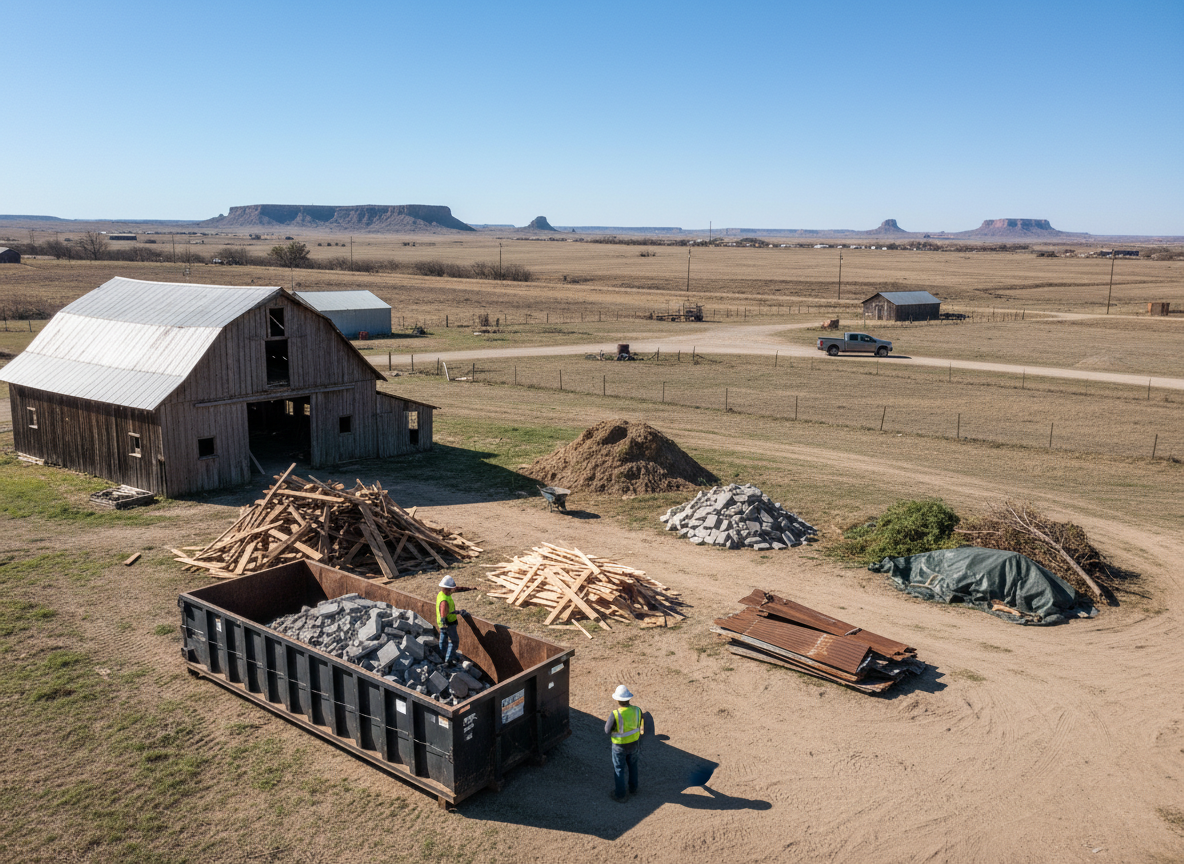
Foard County requires all construction debris generated in Crowell and nearby communities to be hauled to permitted landfills or transfer stations instead of burned or buried on private land. This rule applies to materials from home renovations, barn repairs, and small commercial builds common across the county's older housing stock and ranch properties. Hot summers increase dust and make open burning riskier while cool winters with low rainfall can leave debris piles exposed longer before crews reach them. Residents near Quanah often combine loads with neighbors to reduce trips to the nearest approved facility.
Permitted Disposal Options Across Foard County
Construction debris from Crowell projects must go to county-approved sites that accept concrete, wood, metal, and drywall. Landfills in the region track loads by weight and type, so crews document every delivery to stay compliant. Low rainfall means less mud on access roads but also means crews must secure loads against wind during transport. Many operators use 20- and 30-yard rolloff containers because they fit tight rural driveways and hold mixed loads without multiple hauls. For projects that cross into surrounding counties, drivers confirm acceptance rules in advance to prevent rejected loads at the gate.
Weather and Terrain Effects on Debris Handling
Hot summers in Foard County dry out wood and drywall quickly, reducing odor but raising fire risk if piles sit too long. Cool winters bring occasional freezes that can crack concrete chunks and make metal edges brittle during loading. Low annual rainfall keeps soil firm for heavy truck access on most ranch roads yet creates dust that can coat debris and complicate sorting at the landfill. Crews working near Foard City or Thalia often schedule early morning drops before afternoon winds pick up. These patterns mean containers must be covered tightly and swapped on a tighter schedule than in wetter parts of Texas.
Steps for Compliant Construction Debris Removal
First separate metals and concrete from wood and drywall so each load matches landfill acceptance lists. Next place the material in a construction dumpster rental sized for the project scope. Then schedule pickup within the rental window to avoid extra daily fees. Finally obtain any required county load tickets before the driver leaves the site. Operators in Crowell keep records for at least two years because inspectors may request proof during larger builds. This sequence prevents rejected loads and keeps projects on schedule even when temperatures climb above 100 degrees in July.
Common Violations and How Locals Avoid Them
Burning painted wood or treated lumber draws fines because Foard County follows state air-quality rules. Burying concrete or drywall can contaminate shallow groundwater common in parts of the county. Mixing household trash with construction loads often results in rejection at the gate. Residents near Quanah reduce these risks by using dedicated rolloff dumpster rentals and checking the what affects rolloff dumpster rental prices in Crowell TX guide before ordering. Keeping the container on a level gravel pad also prevents tipping on the uneven terrain found on many older properties.
Planning Debris Removal for Ranch and Farm Projects
Ranch cleanups in Foard County frequently involve old fencing, roofing tin, and concrete slabs from feedlot repairs. These materials require the same landfill documentation as residential jobs. Low rainfall helps keep access roads open year-round but increases the need for tarps to control blowing debris. Operators often combine construction waste with managing farm and ranch cleanup waste near Crowell loads when the container is only partially full. This approach cuts fuel costs and ensures every trip ends at an approved site rather than an illegal dump.